Monday, September 13, 2021

More About the Nylon Fill Material

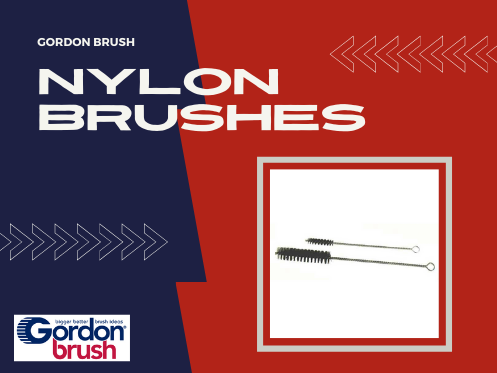
The specific application for a brush or how it is going to be used, determines the components that go into making a brush. The main structural components are the fill material and the handle, block, or frame material. Fill and handle material can be of many different substances. Nylon is one such fill material.

Nylon fill material is used as a brush because it is exceptionally tough, strong, flexible, has excellent elasticity, is durable, abrasion and chemical resistant, and able to withstand extreme heat. Nylon, an organic thermoplastic, comes in a variety of filament types. Common nylon filaments are nylon 6, nylon 66, nylon 610, nylon 612, nylon 11, and nylon 12. Each of the different filaments has a different abrasive capacity and grit. The properties of nylon brushes are related to their bristle grade, length, and diameter.

Handle, block, or frame material is either wood, plastic, or metal. Some brushes do not have a handle. These types of brushes attach directly to power tools or cleaning equipment. These classes of brushes include cylinders, large flat ovals, wheel shapes, centerless cylinders, cup brushes with or without a shank, and others.

Nylon can be adapted, shaped, and configured for many different types of brushes such as, scrubbers for floor machines, cylinder brushes, wheel brushes, cup brushes, twisted-wire-brushes, strip brushes, and hand brushes and have many different uses from ones that can clean your teeth to ones designed to remove rust, paint, grime, and contaminants. The wide use of nylon brushes is due to their many grades, grit types, configurations, and mechanical properties.

Nylon brushes can be used for many different purposes such as abrasion, washing, cleaning, various applications including, painting, applying coatings, getting into hard-to-reach areas, polishing, as a static eliminator, pipe cleaning, conveyors, and wood distressing.

These brushes are essential in many industrial processes such as aerospace, agriculture, automotive, firearms, food processing, medical supplies and instruments, and glass processing, the military, electronics, printing, among others. Regardless of the operation or application, a nylon brush is used to clean, finish, coat, or remove static and contaminants.

To read more from the original article, check out our published piece on the IQS Directory here: https://www.iqsdirectory.com/articles/brush/nylon-brush.html 


Thursday, May 6, 2021

Gordon Brush Mfg. Co., Inc., Creating Jobs in the City of Industry


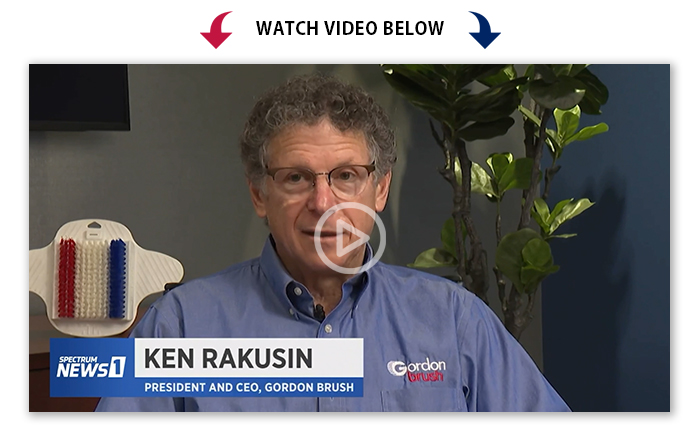
Ken Rakusin keeping business local

CITY OF INDUSTRY, Calif. — In 1990, Ken Rakusin took the position of president at Gordon Brush Manufacturing Company, but he was not sure what he was getting himself into.

The company was based out of a dark and rundown 15,000 square foot facility.
"We had 22 employees. I mean, this was a little, tiny company that was on the verge of going out of business, and every year, for the next six years, I was able to double the company's profits," Rakusin said.

Thirty-one years later, Rakusin said there are 200 employees in a 182,000 square foot facility where they make more than 17,000 types of brushes for many industries, including medical, aerospace, janitorial and military.

Other states recruit Rakusin to set up shop, but he remains committed to keeping jobs in the City of Industry, despite an increasing number of manufacturers going overseas for cheaper labor.

"I could put a lot of money in my pocket if I outsourced everything and I went to China, I went to Mexico," he said. "But I also have this loyalty to my employees. We have people that have been here in excess of 35, 40 years. Our plant manager used to be the janitor."

However, one challenge of staying put in the U.S. is finding workers who have the skills or the desire to work a blue-collar job.

"Nobody that works in a factory that when they were going through school said, 'Gee, I want to make brushes for a living,'" Rakusin said. "It doesn't happen."

It is an issue that Joanna McClaskey, the executive director of the Industry Business Council, is looking at as part of the Made in City of Industry initiative.

The goal is to keep existing manufacturers, which provide about 17,000 local jobs, or 25% of total employment, and attract new ones to the city.

"As far as employment goes, they are the biggest bang for the buck, so the more manufacturers you have, the more amount of people that you can employ in that space that you have," she said.
McClaskey said the council is studying the top industries in the city, determining which ones have the potential to grow and learning the demographics of the best manufacturing workers.

"Where do they live? What is their family size? How old are they? Where are they from? We've done a lot of things in the past through community colleges, and we're finding that that's not the demographic for a really good manufacturing worker," she said.

"There are so many people that college is not their first choice of what they should do in their life," Rakusin said. "They might want to work with their hands. They have this great mechanical mind, or they have this great mind where they love to see machines work and operate and design machines."

He ultimately wants to see more education in the U.S. geared toward those who work best with their hands, preparing them for blue-collar jobs critical to the economy.

Friday, March 19, 2021

Gordon Brush Acquires An Interest in P.S. Creations

P.S. Creations, LLC Manufactures the Award Winning Platescrape® 
CITY OF INDUSTRY, California, March 19, 2021 -- Gordon Brush® has acquired an interest in P.S. Creations, LLC, the manufacturer of the award winning, American made, Platescrape and other products for cleaning and sanitizing surfaces. The Platescrape, invented by Nate Stein, is a bucket and brushes tool for on-and-off-site pre-sanitation of dishes. The Platescrape can effortlessly clean stubborn egg, cheese, and dried on sauces, all while saving water, time and money and restaurants and catering services save thousands of dollars a year in labor, water, and energy costs. Gordon Brush manufactures the brushes that are used in the Platescrape system.

"The Platescrape is a revolutionary product that can save the environment billions of dollars and preserve precious resources," said Ken Rakusin, president & CEO, Gordon Brush. "As the manufacturer of the brushes for the Platescrape, we are pleased that our investment in P.S. Creations can help to develop and promote environmentally beneficial products to clean and sanitize, especially in during the COVID-19 pandemic", added Rakusin.

"Gordon Brush's investment in P.S. Creations will provide the Company with additional capital so that we can develop additional environmentally beneficial products to clean and sanitize and to market our existing products. Since founding PS Creations I have been committed to manufacturing in the United States, so I thank Ken and Gordon Brush for building a company that shares that commitment", said Nate Stein, CEO, P.S. Creations. 


About Gordon Brush®:
Gordon Brush Mfg. Co., Inc., an ISO 9001: 2015 certified company, has a rich history as an American brush manufacturer. Founded in 1951, Gordon Brush® includes two brands whose origin dates to 1855 and 1897. The company consists of 12 brands that operate out of its 250,000 square foot manufacturing facilities in Mississippi and California. Gordon Brush manufactures over 17,000 different types of stock and custom brushes with over 3,500 available for same day shipment.

Gordon Brush® is the 2018 recipient of the Made: In America Award and the 2019 recipient of the Armed Forces Award from Made In America.com.

Company President and CEO, Ken Rakusin, was presented with a special Congressional Recognition Award for his commitment to American manufacturing from House Majority Leader Steny Hoyer and local Congresswomen, Grace Napolitano. Mr. Rakusin was also the recipient of the 2019 Patriot Award from Made In America.com and honored as an American Made Hero by American Made Heroes.com.
About P.S. Creations:
P.S Creations develops, markets, and distributes water and energy conservation as well as cleaning and sanitizing products. The Platescrape® is the winner of the 2018 Innovation of the Year Award from the American Brush Manufacturing Association; the 2019 Most Innovative Product from the Green Restaurant Association; and the 2019 Best New Restaurant Product from the Sabor Latino Restaurant Association.

Monday, February 22, 2021

Medical Instrument Cleaning Brushes

Medical instrument cleaning brushes are essential to prevent cross-contamination and infection. That's why it is imperative to use the right brush to clean instruments thoroughly. Hospital personnel should be familiar with the length and gauge of the brush, and which bristle types should be used on each specific device.


Fill Material Used for Medical Instrument Cleaning

  • Nylon –Nylon is the most durable synthetic filament available. It has excellent abrasion and bristle bend recovery. Nylon resists most acids and will not scratch most surfaces.
  • Polypropylene – Polypropylene is one of the most chemically resistant synthetic materials and is resistant to most acids and bases. Since it does not absorb moisture, it resists fungi and bacteria, sheds dirt easily, and it's easy to clean.
  • Stainless Steel – Stainless steel is highly resistant to corrosion, heat, and chemicals. It should not be used on insulated or coated instruments because it can damage them. Stainless steel is designed to clean instruments that have serrations or box locks. 

There are several guidelines that have been established regarding best practices for medical instrument cleaning and devices. These include the ones published by the AST (Association of Surgical Technologies), the ANSI (American National Standards Institute, Inc.) and the AAMI (Association for the Advancement of Medical Instrumentation).


Manual cleaning is recommended for delicate instruments and devices, such as microsurgical instruments, lensed instruments, power equipment, and other instruments that cannot tolerate an automated cleaning process. For these delicate instruments, it is best to use a nylon fill brush first. If debris still remains on the instrument, then use a stainless steel brush.


Stainless steel brushes are designed to remove debris, stains, and stubborn bio-burden that the nylon brush cannot remove. Stainless steel is intended to be used on bone files, needle holders, burs, hemostats, reamers, scissors, serrated vascular instruments and orthopedic instruments.  


Medical instruments come in many shapes and sizes, so it is imperative for SPDs (Sterile Processing Departments) to have a full assortment of brushes specifically designed to clean them properly. For example, a brush too small for a cannula may result in inadequate cleaning, since it does not provide the necessary scrubbing action. Conversely, using a brush that is too large makes the bristles lay against the wall of the lumen. Even worse, the brush may become stuck inside the channel, ruining both the device and the brush. The bristle should be able to make contact with all the walls of the cannula at the same time.


Gordon Brush® manufactures a wide variety of medical instrument cleaning brushes. These include: medical applicator brushes; medical micro spiral brushes; ring handle medical spiral brushes; thread cleaning brushes; medical toothbrush style brushes; and block brushes; hand scrubbing brushes; vacuum brushes; and other instrument cleaning brushes that are both straight and curved.


If a brush exists, we have it…If it doesn't, we'll make it!

Call us today or search and shop for medical instrument cleaning brushes now!


Tuesday, November 3, 2020

Ken Rakusin featured on brushwaremag.com

KEN RAKUSIN: ACQUISITION MAN

A decade ago, Gordon Brush Mfg. Company President and CEO Ken Rakusin told Brushware that Gordon’s goal was to become “a dominant player in the brush industry…” En route to achieving that objective, the manufacturer of specialty and custom industrial brushes, based out of City of Industry, Calif., has acquired a dozen brand-name companies that have complemented or diversified Gordon’s product offerings. In totality, these brands under the Gordon umbrella manufacture more than 17,000 standard, specialty and custom brooms and brushes for industrial and commercial applications.

That Rakusin would even become a player in the brush industry was far removed from the career path he was on 30 years ago at Xerox in Los Angeles. However, he was looking for a change because he loved LA and loathed the idea of being re-assigned to Xerox headquarters in Rochester, N.Y. Thus, in late 1989, after responding to an ad from Gordon Brush seeking a new president and CEO, he was offered the job. Initially, Rakusin declined the offer, thinking the company was “too small” and “financially struggling” with perhaps six months remaining before going out of business. But “they talked me into it, and thank God they did,” he says in reflecting on a decision that eventually would lead to his building one of the brush industry’s largest manufacturing companies.

By Bob Lawrence
Founded in 1951 by Don Gordon and purchased by aerospace engineer William Loitz 22 years later, Gordon Brush didn’t begin making acquisitions until after Rakusin, and Loitz’s son, Bill, bought the business in 1998. The first acquisition occurred the following year when Marx Brush, a manufacturer of artist and cosmetic brushes out of New Jersey, was acquired. Three more acquisitions would follow during the Rakusin/Loitz ownership: in 2005: Milwaukee Dustless Brush (Milwaukee, Wisc.), a janitorial and sanitation brush manufacturer; in 2006: JEK Inc. (Diamond Springs, Calif.), a manufacturer of brushes for the printed circuit board industry; and in 2008: Redtree Industries, Inc. (Newark, N.J.), a paint applicator and paintbrush manufacturer and distributor for the marine and hardware industries.
Then in 2010, Rakusin became Gordon’s sole owner, setting the stage for a flurry of buys beginning the following year with Glen Ellyn, Illinois based Brush Supply Company, an industrial brush manufacturer. In 2012, he purchased FootMate System, out of Sarasota, Fla., a producer of brush and specially formulated gel for cleaning and massaging feet in the shower or bath.

Time Out 
A four-year hiatus in acquisitions then occurred while Gordon built its colossal new corporate headquarters and plant in the City of Industry and relocated from its Commerce, Calif., facility in 2016. This enabled the company to initially relocate Milwaukee Dustless Brush and Redtree Industries into the facility. With one exception, all future acquisitions would relocate there as well. That same year, Rakusin ramped up his buying by acquiring StaticFaction (Salem, Mass.), the exclusive authorized North American distributor of Thunderon anti-static properties, and J.B. Ward (Franklin, N.J.), the largest manufacturer of Thunderon brushes used to control static electricity in the electronics industry. In 2017, he acquired paintbrush manufacturer Kirschner Brush Mfg. Company (Bronx, N.Y.). Easy Reach, Inc., a manufacturer of wash brushes, extension handles, injection and foam molded brush blocks and other janitorial products was purchased the following year. Parker Brush, Inc., (Rocklin, Calif.), manufacturer of brushes for the agriculture, food processing and electronics industries was acquired that same year. Gordon’s most recent purchase came in 2019 with Spectrum Paint Applicator Corp., a Newark, N.J., manufacturer of consumer paint brushes, paint rollers and artist brushes. Also in 2019, the last companies that operated in their own facilities—Parker Brush, Kirschner Brush and Spectrum Paint Applicators—were relocated to the corporate plant. In every case except Easy Reach, the businesses Rakusin acquired had operated from leased buildings, and rather than having a number of leased locations around the country, Rakusin says it was “logical to move all of them to our new California location because we had enough space to accommodate them. More importantly, we had newer, faster machinery to manufacture their products.” While those relocated are part of Gordon, they continue to maintain their brand names “for now,” Rakusin says. Easy Reach remains in Hattiesburg because, as Gordon’s largest acquisition, “It made the most sense to not only buy the company but to also buy the building, which houses the operation,” Rakusin explains. “Easy Reach is a great company under excellent management and is located in a beautiful 66,000-square-foot facility with room for large increases in business that will occur either organically or perhaps through acquisition.”
How The Acquisitions Occurred
Although eight of the 12 acquisitions occurred during Rakusin’s 10 years of sole ownership, to him, it doesn’t seem like he went on a buying spree. As he explains it, “2010 was a year of many personal changes in my life. Subconsciously, perhaps, I was bored and needed new challenges and something exciting on which to focus!” He says that in the beginning, the many acquisitions made proved challenging to himself and the staff. “Once we figured out how to do it in a way that was best for our employees, customers and vendors, I took advantage of most of the opportunities that were presented,” he says. “There were a few that got away, but they must not have been right for me, otherwise I would have figured out how to get them.”

Each potential buy was either brought to Rakusin’s attention by the owner, an intermediary or a broker because he never sought out a company to purchase. “Most, but not all of them, had severe financial situations and the owner wanted or needed out. Often times, the owners were dealing for decades with the stress of wondering how they were going to make payroll and pay their vendors.” He says the owners were relieved to have someone take over their business and help their legacies continue. “In other cases, the viable and successful businesses we acquired were sold at healthy premiums, as their businesses were worth it,” he says.

ABOVE: Plant manager Ricardo Ruiz with Ken Rakusin
MIDDLE: Machine operator Kevin Garcia inspecting the brush dimensions
LOWER: Kevin Garcia observing that the machine program is staple setting the bristles properly
Valuing The American Brush Manufacturers Association (ABMA)
Rakusin says attending ABMA conventions and being involved in the association, including serving on the board of directors for 16 years, directly and indirectly, led to the acquisition of eight of the companies. Serving as its president, 2005-2007, and a member for 30 years, he’s been a “fanatical proponent of ABMA membership and attendance.” That he would become an integral part of the association was unforeseen when he joined Gordon, an ABMA member that had never sent a representative to its conventions until he decided to attend one in Scottsdale, Ariz., in March 1990, just six weeks after his employment began and even though he worried whether the financially-troubled company could even afford the air travel, hotel and his taking time off to attend. As he recalls, “I was afraid to go because I was naive and didn’t know anything about the industry or anyone in it. What I saw there were very powerful and impressive people. I was wowed by all the knowledgeable people I met, and the networking opportunities were like nothing I could ever have imagined.” 

Early in his ascendency in the association, he became disgruntled with the prior management firm’s inactivity to adhere to the board’s directives while it annually sought massive fee increases. Investigating, he discovered that ABMA “could save tens of thousands of dollars, become more efficient and get things done to benefit the membership.” As a result, former member David Parr won the bid to take over the association as executive director, “leading to its solvency and growth.”

Rakusin believes his involvement, which led to the majority of his acquisitions, is proof of one of the potential benefits of being a participating member. “As I reflect over time, I did not plan on buying these businesses; the deals just continued to fall into place,” he says. 
He explains that the first acquisition, Marx Brush, only happened because he was in the New York metro area for a couple of days before he went to Chicago for an ABMA board meeting. “While in town, I visited 10- 12 brush companies, met people whom I did not know and bought Marx,” he says “Nothing was planned, but if not for the ABMA board meeting, I would have flown home with my family and missed the opportunity.” Rakusin adds that the only reason he purchased Marx was because it was “a great deal.”
He says it turned out to be an amazing acquisition because of the timing, as it was purchased a couple of years before a significant recession dampened the United States economy. “The Marx business, as well as subsequent products that we made for its customers, generated a significant amount of revenue for Gordon,” Rakusin says. “This helped to rapidly pull us out of the effects of the recession.”

Rakusin’s connections within the association led to other acquisitions including Easy Reach, which two ABMA vendor friends told him about, one saying it was for sale, the other telling him about its “excellent management team.” Longtime relationships forged through the association have also created opportunities for Gordon’s growth. When StaticFaction’s Ian Moss, a Rakusin friend for nearly 30 years, and Ed Boscia of J. B. Ward, a friend for 25 plus years, were ready to sell their successful companies, Rakusin was ready to buy. The deal with StaticFaction actually occurred at an ABMA meeting in St. Petersburg, Fla., while he and Moss were sitting in chairs on the front lawn of the Renaissance Vinoy. “Once again, the value of my involvement with the ABMA cannot be understated,” Rakusin says.

Why Others Sold And Why Gordon Bought
“The main reasons that companies have sold their businesses to us is because the owners have wanted to retire and eliminate all the normal business issues including personnel, finances and the investments required to remain on the leading edge and competitive,” Rakusin says. “At Gordon Brush, we are always looking to make investments in acquisitions and machinery.” He says the company is well-capitalized and knows that personnel issues are solvable. “I also believe that the owners sought out working with Gordon Brush not just because we had the ability to buy them, but also because they were able to see the longevity and high standards of our company. I feel honored that they entrusted us to continue the legacy they had built,” he says. Rakusin adds that Gordon Brush has a proven track record of acquiring businesses and maintaining all the good things they were doing on their own and then improving. “Over my 30 years in the business, I have never sold anything, only acquired other companies,” Rakusin says. “My heart is in building and running an American brush manufacturing business, not as an investor where I’m looking to increase my profits by going overseas, but by maintaining the quality and standards of American manufactured products, as well as keeping jobs here in America.” He says that by making large investments in machinery, Gordon Brush is able to make products better and faster. “I can assure you that we have been able to craft even better-quality products than the prior provider,” he says.

Asked if any of Gordon’s other company purchases were of a similar nature to J.B. Ward and StaticFaction in that they were acquired to complement each other, Rakusin replies that “purchasing Marx in 1999 propelled Gordon Brush into the artist brush business and buying Redtree in 2008 moved us into the paint applicator business.” The Kirschner and Spectrum acquisitions created synergy for the artist and paintbrush manufacturing. “We have become more skilled at making both types of product lines, as our volume is now much greater,” he says. “Acquiring JEK, Brush Supply, J. B. Ward and Parker Brush have all improved the custom brush portion of our business, which integrates very nicely with the custom work we already produce at Gordon Brush.”
When exploring a company for potential acquisition, Rakusin begins by looking at its brand, product line, how long it’s been in business and its perceived reputation. “I then spend a significant amount of time understanding their financial position. I’m always open-minded when I first learn about a company, but as I explore the details, there are times when I have decided to pass on the acquisition for a variety of reasons. Sometimes the timing isn’t right, the seller might want a premium that is too high or perhaps I can’t see a road to profitability. Having stated these things, I still try my best to make a deal that will be a win-win.”
An “American Made” Champion
Paramount in Rakusin’s promotion of the Gordon companies is his strong belief that the US should manufacture products for home consumption on its own soil. As he puts it, “We are determined to build and grow our business in the United States.” This is opposite of the thinking of droves of companies that years ago abandoned America for cheap labor offshore. In explaining his philosophy. Rakusin says, “Without getting too political, I have always valued making products in America.” He explains that his companies are financially successful, and he values the employees, many having worked for Gordon for 30-40, or more, years. “These team members have given their lives to helping Gordon Brush grow and become successful. I make a reasonable amount of money, and being selfless, I enjoy doing things for others, whether it is for my employees, personal friends, other ABMA member suppliers or other brush companies,” he says. 
He says that making more money at the expense of terminating the workforce is not something he would ever be willing to do. “Having an extensive inventory and making things in the USA also allows us to be nimble and supply our customers quickly, especially compared to Asia,” he says. “I am proud that over my 30 years in the business, Gordon Brush has been able to have dramatic success AND still manufacture almost everything here in California.”

He also says that as the demand for American-made products increases, “Gordon is proud to be at the forefront of that movement,” an indication that Rakusin believes demand for American-made products will spark a return of manufacturing to the US. “In my opinion,” Rakusin says, “I hope that our experience with COVID-19 and our inability to source critical PPE here in the US have shown the value of American-made products and will lead the effort to move more manufacturing back to the United States.” He says that whether or not it happens, Gordon Brush will continue to invest in machinery so it can continue to grow the business domestically. 

A Dominant Player?
In the opening paragraph of this article, Rakusin was quoted as stating that Gordon’s goal was to become “a dominant player in the brush industry…” Asked if his company is there yet, Rakusin replies, “Gordon Brush will never be where we want to be as the bar keeps getting higher. Warren Buffett was the wealthiest person in the world, then along came Bill Gates, Bernard Arnault and now it’s Jeff Bezos. One learns over time that we are always in between. No matter how successful one becomes, there is always someone/something doing better. However, we will keep marching forward. We are proud of what we have achieved compared to where we have come from. I look forward to seeing what lies ahead.”

Given that the latest of the continuous string of acquisitions, Parker Brush, Inc. and Spectrum Paint Applicator Corp., occurred in 2019, Brushware wanted to know whether another acquisition announcement might come before the end of this year. Rakusin’s reply: “This is a tough question to answer because I’ve learned to never pre-announce what might happen. Let me close by stating that anything is possible as we continue to look for growth.”

-BRM

Tuesday, September 15, 2020

Spotlight on US Manufacturing – Gordon Brush Co

AS FEATURED ON: BuyDirectUSA.com
https://www.buydirectusa.com/spotlight-on-us-manufacturing-gordon-brush-co/


Gordon Brush of Industry California and the makers of the Footmate® Personal Foot Spa and so much more launched in 1951.

The White House over the past several years has had a spotlight on US manufacturers from every state, but they have limitations on the number of people who can attend and with the pandemic there is no telling what the future holds for the event.

Gordon Brush makes an awesome consumer product called the Footmate® system. It’s a personal foot massager that helps make your dry cracked feet soft and relaxed. I have personally tried it and it’s simple to use and it is effective. Best of all its made in the USA by American workers who take pride in what they do.

As a matter of fact, the highly popular Footmate® works so well, that several companies decided they should make something similar and start marketing on websites like Amazon and others.  While the Footmate® Personal Foot Spa is made in the USA, the copycats were all made in China.

I personally found several of the copycats on Amazon and alerted my contact at Gordon Brush. There was even a version of it being sold on late night TV commercials. Trying to alert Amazon to an issue is like trying to be spotted in the ocean while wearing blue. There is some advice on getting those violating intellectual property rights on this Amazon forum, but even there the users are frustrated with the amount of time it takes to get a response.

The Chinese knockoffs are still being sold on Amazon. Any novice can take a look at them and see they are nearly identical in design. They also sell at less than what it costs to make the American Made Footmate®. Consumers can complain to Amazon via reviews

This makes it a challenge, but the hard working men and women at Gordon Brush remain steadfast at putting out quality products and strive to beat down the copycats with quality products and superb customer service.

The folks at Gordon Brush not only make the Footmate®, but they make more than 17,000 kinds of brushes for nearly every industry in their 183,000 square feet manufacturing facility. They strive to make every piece with the highest of care and quality even when they are producing 50,000 to 100,000 pieces a day. The majority of their products are made for various industries and if you need a specialty made brush, contact them, they can most likely produce it.


They don’t just stick to what they have in their catalogue, if a new type of brush is needed for other applications, they will produce it as well.

Gordon Brush is proud of their American Made products and one of their best customers is the US military. Their American made products have helped save the military millions of dollars over the years. Something all American taxpayers are happy about.

Our hats off to the hard working men and women of Gordon Brush from the main office to the manufacturing floor, to the customer service reps. Thank you for making great products in the USA.

Spotlight on American Manufacturing is an ongoing series showcasing the hard working men and women of American Manufacturing.

Friday, September 4, 2020

The Platescrape

 Making the World a Better Place One Plate at a Time™

One of the many truisms in this world is that if you put food on a plate, you're going to end up with a dirty plate.  Think of cheese, grease, or any other food item that gets baked onto a plate. Now think of washing that plate; having to dislodge the goo before putting the plate into the dishwasher.


If you're at home, it's probably no big deal. But what if you are a traveling caterer or a restaurant? Time is money and so are labor, water, electricity, and refuge. How can I get those stuck, baked on, caked on items off the plates, especially when I do not have a dishwasher at my disposal?


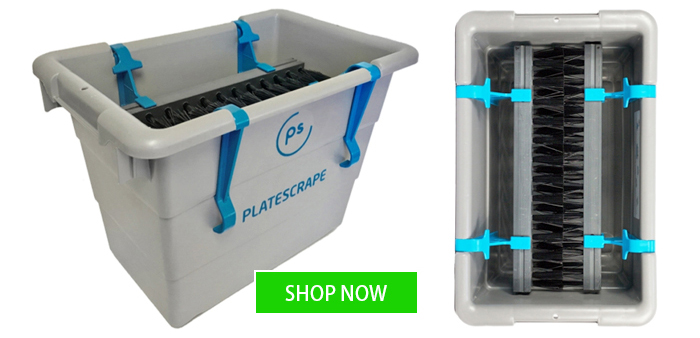
Introducing the Platescrape! The Platescrape is a bucket that contains two very stiff sets of brushes, parallel to each other, set inside the bucket containing soapy water. The dirty dish is inserted in between the two sets of brushes and with and up and down motion, the dish is scrubbed. All of the gooey cheese and other baked on, caked on food is easily removed from the plate. When ready, simply put the scrubbed plate in the dishwasher.


Gordon Brush® custom designed and manufactured the brushes for Platescrape. The Platescrape was awarded the 2018 William A. Cordes Innovation Excellence Award from the American Brush Manufacturers Association (ABMA).

Watch the video (https://www.gordonbrush.com/videos/PlateScrape.mp4) to see how easy it is to use the Platescrape. You too can save time and money and help preserve precious environmental resources.


If a brush exists, we have it…If it doesn't, we'll make it!